
Contents:
When you’re applying for a lease, your rental application isn’t just about income, as many landlords will also run a background check and review your credit and payment history. If you’re wondering, “What do landlords check before renting,” we put together this rental background check checklist to help you meet your apartment application requirements and find the housing you need.
Your DIY Financial Background Check Checklist
Before a landlord looks into your background and credit history, it’s important to run a check on yourself. Even if you believe you have good credit and got along with your previous landlords, there could be some surprises that would impair your application.
1. Do a Credit Report Review
Many landlords use minimum thresholds for credit scores, so it’s a good idea to know yours before you apply. You can check your credit for free every week at AnnualCreditReport.com. It will give you a report from each of the nation’s three credit reporting bureaus: Equifax, Experian, and TransUnion.
This is known as a soft pull or a soft inquiry, so it won’t show up in your credit reports or have any impact on your credit score. If you see any inaccuracies, such as accounts you don’t recognize, reach out to whichever bureau lists that information and get it corrected. An account you don’t recognize could be a sign of identity theft.
If there are any late payments, collection issues, or outdated negative remarks, you’ll need to act quickly, as these can take time to resolve. If you’ve settled a debt but it still appears on your credit report, you could contact the company that held the debt (such as a collections agency) and ask them to remove that information from your report.
2. Rental History Check
Think about your rental history and if any issues might concern a landlord, as history checks from two to five years are common, though some landlords might check for up to seven years. They could do this by calling your previous landlords. They might also use a tenant screening service.
Do you have any past evictions or gaps in your rental history? A prospective landlord could ask you to explain this or might reject your application altogether. You might contact your previous landlords to confirm that they’ll give you a positive reference and verify that you paid your rent on time. For any gaps in your rental history, your explanation could have an impact on your application. If you didn’t have a lease because you were attending school, owning your own home, traveling, or living with friends or family, just explain this to a landlord when filling out your rental application, because it’s unlikely to impact your application.
3. Outstanding Debts & Collections
Do you have any open balances, unpaid debts, or accounts that are currently in collections? Even small, unpaid balances can be a red flag with landlords. Try to pay off or settle any debts, even minor ones, before applying.
4. Income & Employment Verification
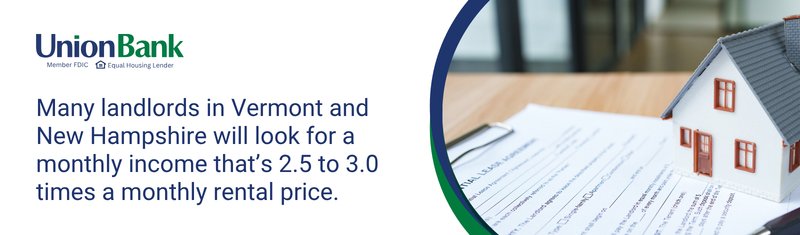
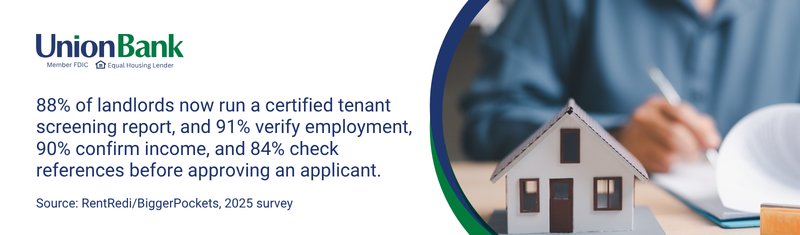
Your landlord will want to verify your employment and income, so gather your documents in advance. This will likely include recent pay stubs and/or a letter from your employer verifying that you work for them. Many landlords in Vermont and New Hampshire will look for a monthly income that’s 2.5 to 3.0 times a monthly rental price, so you may want to keep that in mind when looking for a place. If your income varies from week to week or month to month, you may need to show monthly bank statements and/or your annual tax returns to demonstrate that you’ll be able to pay your rent on time.
5. Background Screening Factors
Some landlords run broader background checks than others. Some will simply check your credit history, verify your income, and check with your former landlords. Others may use a background check service to investigate your rental history and public records for any signs of past legal or housing-related issues.
6. Bank Account Health
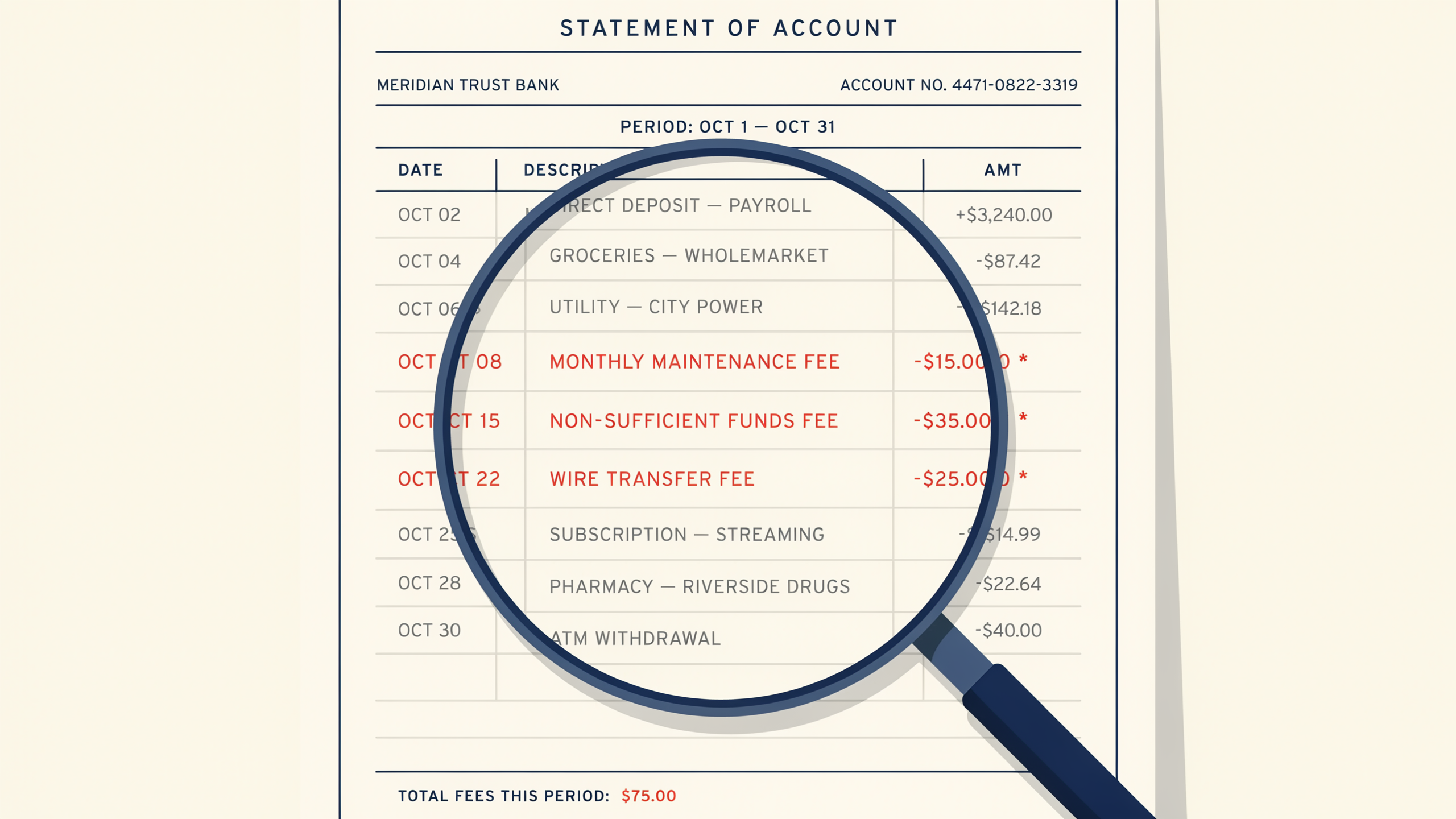
A landlord may ask for copies of your bank statements, ranging anywhere from the past three to six months. They’ll be looking for things like consistent balance levels and account overdrafts, so it would be a good idea to keep your account balances stable in the months leading up to your rental application.
What If Something Isn’t Perfect?
If there are any potential red flags in your application, you still might be able to get approved for a lease. You might offer a short letter explaining any past issues and why they won’t be a problem in the future. If you can show proof of consistent financial stability over the past few months, it might convince a landlord to approve your application.
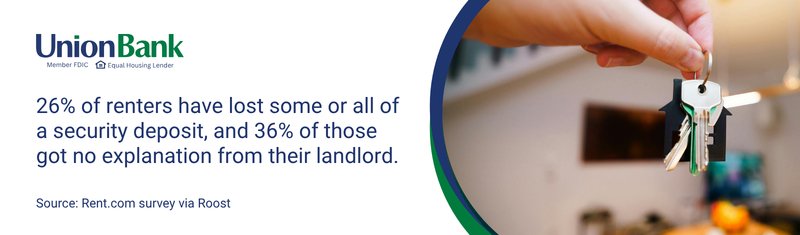
You could also ask a friend or relative to be a co-signer on the lease, which would obligate them to cover your rent if you’re unable to do so. A typical security deposit is one month’s rent, in addition to your first month’s rent, before you move in. If possible, you might offer to make a larger security deposit as a way of addressing their concerns.
Know Your Legal Rights
Landlords in Vermont aren’t allowed to charge an application fee to prospective tenants, but this is allowed in New Hampshire. The federal Fair Housing Act prohibits landlords and other businesses from discriminating against someone based on race or color, religion, sex, national origin, familial status, or disability.
Security Deposit Requirements in New Hampshire
New Hampshire limits security deposits to the equivalent of one month’s rent. Landlords must give tenants a signed receipt that indicates the deposit amount and where it will be held. Landlords must keep the security deposit in an interest-earning account with a bank or similar financial institution. Landlords can also purchase a bond with the security deposit funds.
Any landlord that holds security deposits for a year or more must pay interest on them and inform the tenant where the security deposit is held. Security deposits must be returned, with interest, within 30 days after the end of a lease. If part of the security deposit is withheld to cover the cost of damages, a landlord must give the tenant a written, itemized list of such damages.
New Hampshire’s security deposit laws do not apply to landlords who rent a single-family residence and no other properties, or owner-occupied buildings of five units or less, but if any tenants are age 60 or older, then the law does apply.
Security Deposit Requirements in Vermont
Vermont doesn’t limit the security deposit a landlord can require, but landlords must return a deposit within 14 days of a tenant vacating a residence if the tenant provided a written notice. For tenants who don’t provide a written notice, a landlord must return a security deposit within 14 days of discovering that a tenant has moved out. Landlords must also provide an itemized list if they withhold part of the security deposit. Both the deposit and itemization must be given to a tenant by hand or mailed to the tenant’s last known address.
We’re Here to Help with Your Banking and Financial Needs
Most rental application issues can be managed by preparing yourself in advance, so being ready to address them is important. If you need help or have questions about financial issues, we offer information on financial literacy and consumer education on our website. You can also contact us online or at one of our branch locations in Vermont and New Hampshire.
Publisher: Source link