Key Takeaways
- Owing the IRS does not directly affect your credit score because the IRS does not report tax debt or IRS payment plans to the major credit bureaus.
- Unpaid tax debt can still create financial problems through penalties, interest, tax liens, wage garnishments, and bank levies, which may indirectly impact your ability to manage other debts.
- Federal tax liens no longer appear on consumer credit reports, but lenders may still discover them through public records when reviewing mortgage or other loan applications.
- IRS installment agreements do not hurt your credit and can help you avoid more aggressive collection actions while paying your tax debt over time.
- Ignoring IRS tax debt can make it harder to qualify for loans, even with a strong credit score, because lenders often consider your overall financial obligations during underwriting.
- The best way to protect your financial health is to act early by filing your tax returns on time, paying what you can, and exploring IRS payment plans or tax relief options if you cannot pay your balance in full.
Many taxpayers worry that falling behind on their taxes will immediately damage their credit. If you’re carrying an IRS balance or have received collection notices, you may be wondering whether your credit score has already taken a hit.
The good news is that, in most cases, owing the IRS does not directly affect your credit score. Unlike credit card companies, mortgage lenders, and other creditors, the IRS does not report tax burden to the three major credit bureaus. However, that doesn’t mean unpaid taxes are without consequences. Tax liability can still impact your finances in ways that make borrowing more difficult and increase financial stress.
Understanding the relationship between tax liability and your credit can help you make informed decisions before your situation becomes more serious. Here’s what you need to know about whether owing the IRS affects your credit score and what steps you can take if you’re struggling with unpaid taxes.
The Short Answer: Does Owing the IRS Affect Your Credit Score?
Although tax liability can create significant financial challenges, it’s important to understand how it differs from other types of debt. Knowing what is—and isn’t—reported to credit bureaus can help clear up common misconceptions.
Tax Debt Is Not Included on Credit Reports
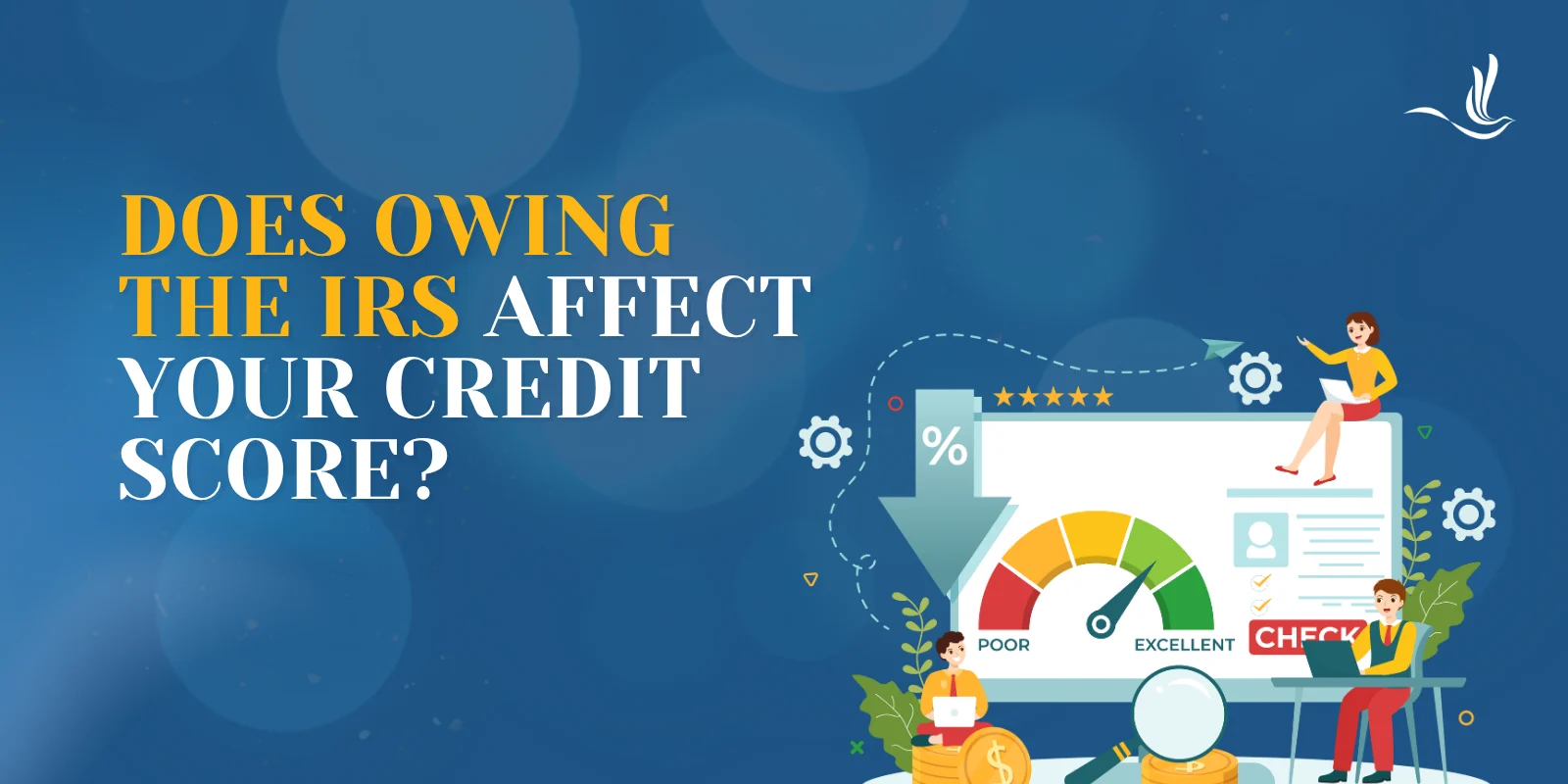
The simple answer to the question, does owing the IRS affect your credit score, is no—not directly.
The IRS does not report unpaid tax balances to the three nationwide credit reporting agencies: Experian, Equifax, and TransUnion. Since your tax debt is not included on your credit report, it is not factored into the credit scoring models used by lenders, including FICO® and VantageScore®.
For example, if you owe the IRS $8,000 after filing your tax return but continue making timely payments on your credit cards, mortgage, and auto loan, your credit score generally will not decrease solely because of the IRS balance.
This differs from many other types of debt. Late payments on credit cards, personal loans, mortgages, and auto loans are typically reported to credit bureaus and can significantly reduce your credit score. Tax debt, however, exists outside of the traditional credit reporting system.
Why People Think Tax Debt Hurts Credit
Many people believe unpaid taxes automatically damage their credit because this was once partially true.
For years, federal tax liens appeared on consumer credit reports. Since tax liens are public records, credit bureaus included them as negative items that could substantially lower a person’s credit score.
That began changing in 2017, when the major credit bureaus started phasing out tax liens due to concerns about data accuracy. By April 2018, tax liens had been removed from consumer credit reports entirely.
As a result, simply owing back taxes no longer causes a direct drop in your credit score. However, tax debt can still create other financial complications that indirectly affect your overall financial picture.
Can IRS Actions Indirectly Affect Your Financial Health?
While your credit score may remain unchanged, unpaid tax debt can lead to IRS collection actions that create financial strain. These consequences may not appear on your credit report, but they can make it harder to manage your finances and qualify for future loans.
Tax Liens
A federal tax lien is the government’s legal claim against your property when you neglect or fail to pay a tax debt. The IRS may file a Notice of Federal Tax Lien after sending multiple notices requesting payment. Although these liens are no longer reported by major credit bureaus, they remain public records.
This means lenders, particularly mortgage lenders, may still discover a tax lien during the underwriting process. A lien can raise concerns because it gives the federal government a legal claim against your property before many other creditors.
For example, someone applying for a home loan may have an excellent credit score but still face delays or additional documentation requests because a lender identifies an outstanding federal tax lien during its review.
Wage Garnishments
If tax debt remains unresolved, the IRS may eventually garnish your wages through a wage levy.
Unlike traditional wage garnishments ordered by a court, the IRS generally does not need a court judgment before levying wages. A portion of each paycheck may be withheld until the tax debt is resolved or other arrangements are made.
Although wage garnishment itself doesn’t lower your credit score, it reduces your available income. This reduced cash flow may make it harder to keep up with monthly obligations such as:
If missed payments occur on these accounts, those creditors may report delinquencies to the credit bureaus, which can negatively impact your credit score.
Bank Levies
The IRS also has the authority to levy bank accounts in certain situations. A bank levy allows the IRS to freeze funds in your account before seizing money to satisfy your tax debt. Losing access to your checking or savings account—even temporarily—can create a chain reaction of financial problems.
Automatic payments may fail, checks may bounce, and recurring bills may go unpaid. Again, the levy itself does not appear on your credit report, but the financial hardship it creates could eventually lead to missed payments reported by your other creditors.
Private Collection Agencies
In some cases, the IRS turns older, inactive tax debt over to a private collection agency instead of pursuing it directly. Unlike the IRS itself, these agencies can and do report accounts to the credit bureaus. If your tax debt is assigned to a private collector, that account could show up on your credit report as a collections item — which can lower your score just like any other unpaid debt sent to collections.
Penalties and Interest
Tax debt doesn’t remain static. The IRS generally continues charging interest and may assess penalties until the balance is paid in full or otherwise resolved. Over time, what started as a relatively manageable tax bill can grow substantially.
As your balance increases, it may become more difficult to catch up financially. This added strain can force taxpayers to prioritize IRS payments over other financial obligations, increasing the likelihood of falling behind on debts that do affect credit scores.
Can Tax Debt Affect Your Ability to Get a Loan?
Even though tax debt typically doesn’t appear on your credit report, lenders often evaluate more than just your credit score. Outstanding IRS obligations may still influence lending decisions depending on the type of financing you’re seeking.
Mortgage Applications
Mortgage lenders conduct extensive financial reviews before approving a loan. In many cases, lenders review IRS tax transcripts, recent tax returns, income documentation, and outstanding federal obligations. If they discover unresolved tax debt, they may require additional documentation before approving the mortgage.
Some lenders may ask borrowers to:
- Pay the tax debt in full
- Enter into an IRS installment agreement
An unresolved IRS balance doesn’t automatically prevent homeownership, but it may complicate or delay the approval process.
Auto Loans and Personal Loans
Auto lenders and personal loan providers typically focus heavily on credit scores and debt-to-income ratios. However, some lenders also evaluate your overall financial stability.
If you disclose outstanding tax debt or the lender discovers an IRS lien during underwriting, it could influence the lending decision.
For example, two borrowers may have identical credit scores, but the applicant with unresolved IRS debt may be viewed as presenting greater financial risk.
Small Business Financing
Business owners may face additional scrutiny when seeking financing. Many lenders—including those participating in Small Business Administration (SBA) loan programs—review tax compliance during the application process.
Outstanding payroll taxes, business tax liabilities, or unresolved IRS issues may delay financing or require borrowers to resolve tax obligations before funding is approved.
For entrepreneurs, maintaining current tax compliance can improve financing opportunities while reducing complications during loan underwriting.
What Happens If You Ignore IRS Tax Debt?
Ignoring tax debt rarely makes it disappear. Instead, unresolved balances often trigger increasingly serious collection efforts that can become more difficult and costly to resolve over time.
IRS Collection Process
The IRS generally follows a structured collection process before taking enforcement action.
It typically begins with mailed notices informing taxpayers of the balance due. If payment is not received, the IRS may continue sending increasingly urgent notices requesting payment.
If the balance remains unpaid, collection actions may include:
- Filing a federal tax lien
- Seizing certain assets in severe cases
While not every taxpayer progresses through every stage, responding early often provides more opportunities to resolve the debt through voluntary payment arrangements.
Additional Financial Consequences
Beyond collection actions, unpaid taxes can create several other financial consequences. Interest and penalties continue accumulating until the balance is resolved, increasing the total amount owed over time.
Taxpayers with seriously delinquent tax debt may also face passport-related consequences. In certain cases, the IRS can certify seriously delinquent tax debt to the U.S. Department of State, which may result in the denial of a passport application or renewal until the debt is addressed. As of 2026, this applies to unpaid federal tax debt exceeding $66,000, including penalties and interest — a threshold that’s adjusted annually for inflation.
Additionally, ongoing IRS notices and collection efforts can create considerable financial and emotional stress, making it harder to focus on long-term financial planning.
How to Prevent IRS Tax Debt from Becoming a Bigger Problem
If you owe taxes, taking action early can significantly reduce the risk of more serious collection activity. Fortunately, the IRS offers several options that may help taxpayers resolve their balances while minimizing additional penalties and enforcement actions.
File Your Tax Returns on Time
One of the biggest mistakes taxpayers make is failing to file because they cannot afford to pay.
Even if you cannot pay your full tax bill, filing your return on time may help reduce certain penalties and demonstrates compliance with IRS filing requirements. Filing also allows you to begin exploring available payment or resolution options sooner.
Pay What You Can
If paying the full balance isn’t possible, paying as much as you reasonably can may still help. Partial payments reduce the outstanding principal, which can lower the amount of interest that accrues over time. They may also demonstrate good-faith efforts to address your tax obligation. Every payment helps reduce the overall balance and limits future costs.
Consider an IRS Payment Plan
Many taxpayers qualify for an IRS installment agreement. An installment agreement allows eligible individuals to make monthly payments over time instead of paying the entire balance immediately.
Remaining current on an approved payment plan can help taxpayers avoid more aggressive collection actions while gradually resolving their tax debt.
Before entering any payment arrangement, it’s important to understand the monthly payment requirements and remain compliant with future tax filing and payment obligations.
Explore Other Tax Relief Options
Depending on your financial circumstances, additional IRS relief programs may be available. Some taxpayers may qualify for an Offer in Compromise, which allows eligible individuals to settle their tax debt for less than the full amount owed.
Others experiencing financial hardship may qualify for Currently Not Collectible (CNC) status, temporarily delaying collection efforts while their financial situation improves. Taxpayers may also qualify for penalty abatement if they have reasonable cause for failing to file or pay on time or meet certain administrative requirements.
Since every taxpayer’s situation is unique, evaluating all available options can help identify the most effective path toward resolving IRS debt.
How Optima Tax Relief Can Help
Resolving IRS tax liability can feel overwhelming, especially when collection notices continue arriving or enforcement actions become a possibility. Understanding your options is the first step, but navigating the IRS process often requires careful planning and knowledge of available resolution programs.
Optima Tax Relief works with taxpayers to evaluate their unique financial situations and identify appropriate solutions based on their circumstances. Depending on eligibility, this may include assistance with installment agreements, Offers in Compromise, penalty abatement requests, Currently Not Collectible status, and other IRS resolution options.
Our experienced tax professionals can also communicate directly with the IRS on your behalf, helping explain notices, gather required documentation, negotiate available solutions, and work toward resolving your tax debt as efficiently as possible.
Taking action early may help reduce the likelihood of more serious collection actions such as wage garnishments, bank levies, or federal tax liens. Even if you’re unable to pay your balance in full, exploring your options sooner rather than later can often provide more flexibility for resolving your tax obligations.
Frequently Asked Questions
Does owing the IRS affect your credit score?
No. Owing the IRS does not directly affect your credit score because the IRS does not report tax debt to the three major credit bureaus—Experian, Equifax, and TransUnion. However, unpaid tax debt can lead to IRS collection actions that may indirectly affect your financial health and borrowing ability.
Does an IRS payment plan affect your credit?
No. An IRS payment plan, also known as an installment agreement, does not affect your credit score because the IRS does not report these agreements to credit bureaus. In fact, entering into a payment plan can help you avoid more serious collection actions while you work toward paying off your tax debt.
Do IRS payment plans affect your credit?
No, IRS payment plans do not appear on your credit report and are not included in credit scoring models. While the payment plan itself won’t impact your credit, failing to keep up with other financial obligations due to tax debt could indirectly hurt your credit score if those accounts become delinquent.
Do IRS installment agreements affect credit?
No. IRS installment agreements do not directly affect your credit because they are not reported to the major credit reporting agencies. Staying current on your installment agreement can also help reduce the risk of IRS enforcement actions, such as wage garnishments or bank levies, that could create financial challenges.
Tax Help for People Who Owe
So, does owing the IRS affect your credit score? In most cases, the answer is no. The IRS does not report tax debt to the major credit bureaus, and simply owing back taxes will not directly lower your credit score.
However, that doesn’t mean tax debt should be ignored. Unpaid taxes can lead to penalties, interest, tax liens, wage garnishments, bank levies, and challenges when applying for mortgages or other loans. These indirect consequences can create financial hardship that may eventually affect other accounts that do impact your credit.
If you owe the IRS, the best course of action is to address the debt as early as possible. Filing your returns on time, exploring payment plans, and understanding available tax relief options can help you avoid more serious collection actions and put you on the path toward long-term financial stability. Optima Tax Relief is the nation’s leading tax resolution firm with over $3 billion in resolved tax liabilities.
If You Need Tax Help, Contact Us Today for a Free Consultation.
Publisher: Source link